
 |
| Picture from author's collection |
Last night my daughter (14) came to me: "Dad, my
screen is not working." She has a separate screen in her room for her
laptop. According to the old adage check
cables first I checked that both
ends of the cable were in place. I then grabbed another HDMI cable to find out
if her cable might be the culprit. No result.
She came home just before the end of the world yesterday
(it's been quite stormy here), so I asked if her things had gotten wet. Well,
not really, only the cap had come off her water bottle in the bag. But luckily
that water bottle was empty. She thought.
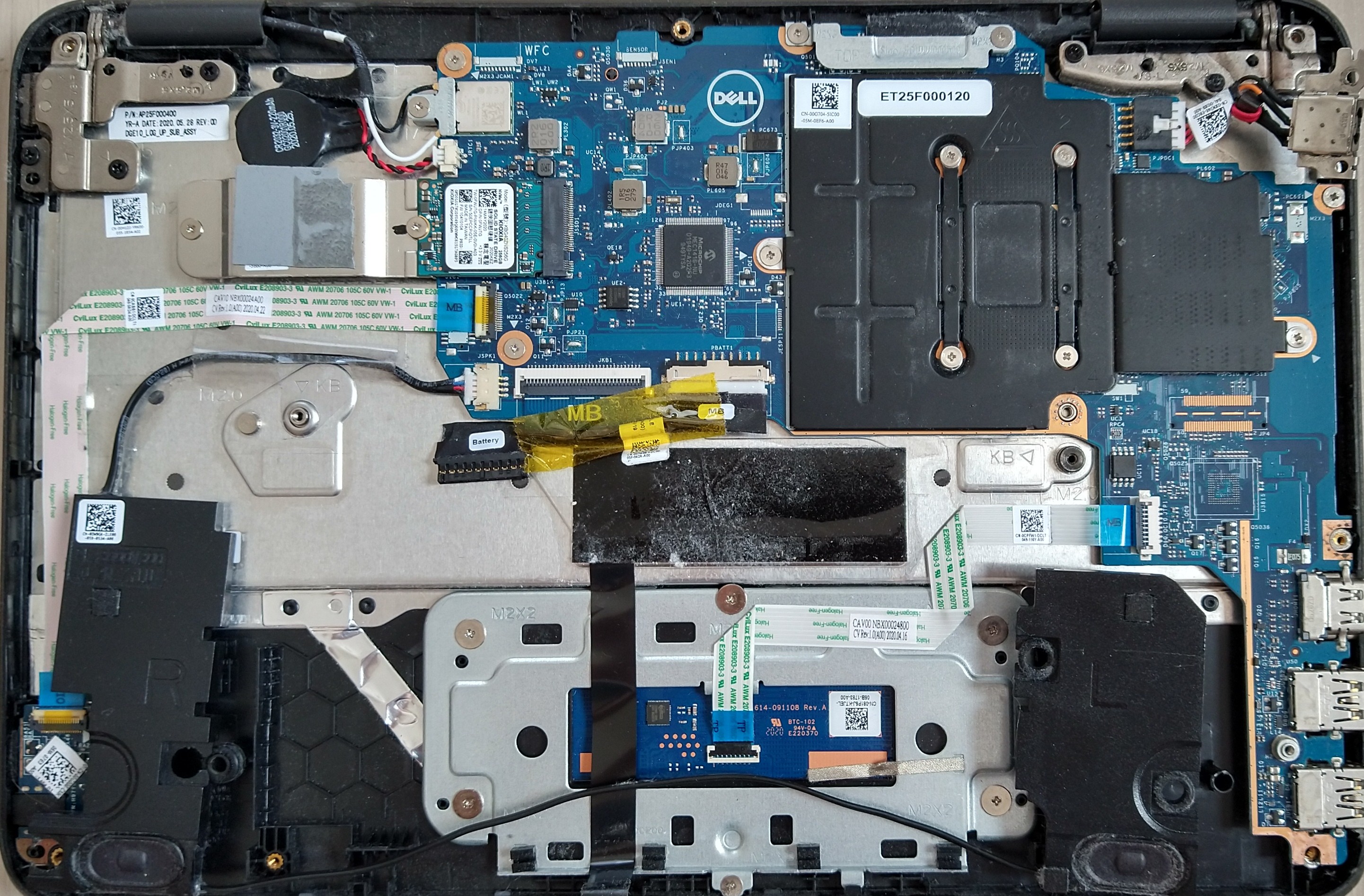
I opened the laptop and immediately saw that something
was wrong: it was damp in several places. First I took out the battery and
patted the damp spots dry with tissues, and I gave the HDMI port the same
treatment. The speakers also had to be dried, because no sound came out of the
laptop, as my daughter reported reluctantly. I loosened quite a few screws in
order to reach several spots. That I dare to do so, I owe largely to a
colleague, with whom I once went to a computer fair a long time ago, where we
bought individual parts and then put together a PC ourselves.
It’s been said one should put a telephone that has fallen
into the toilet or into the sea in a bag of rice, because the rice absorbs the
moisture. I hesitated for a moment whether I would give the laptop such a
treatment, but decided against it because I was afraid that the rice grains
would get stuck in various places and that didn't seem like a good addition to
the hardware. Instead, I grabbed the hair dryer and worked the guts of the
laptop on a low setting—for both heat and blowing power.
“Never use a hair dryer”, I just read in two different
articles, which looked up because I really wanted to know more about that rice
advice (no one is talking about that, by the way). Ouch, that hair dryer wasn't
such a good idea, because the heat can damage the sensitive parts and the wind
can blow the moisture in the direction of extra moisture-sensitive parts.
Fortunately, the hair dryer was on low; I'm pretty sure the laptop itself produces
more heat than it endured from my action. And the laptop wasn’t like soaking
wet, so I don’t think that a lot of moisture could have been moved. But I
didn't unscrew enough components to see everything.
In the event of a disaster, you have to act quickly, but
if you have to think about what exactly to do at that very moment, you may end
up doing things you shouldn't have done. A wet laptop must be switched off
completely as soon as possible, all plugs must be removed and then you dry it
as well as possible inside and out. So far I've done the right things. At that
point I should have done what I only did this morning: get information about the
next steps. And of course it would have been even better if all this had been
ready knowledge.
I pointed out to my daughter that she should have come to
me as soon as she noticed that the laptop was damp – because she certainly had.
She looked taken aback when I told her that her laptop would be left open to
dry for at least a day. “But then I can't do anything for school!” she
exclaimed indignantly. Yes that's right. And this event also reminds us that
she should not store her files on the laptop, but on the NAS (hard drive in our
home network). I told her this long ago, but after that I never checked whether
she actually acts upon my directive, and whether she understands how to do it
at all.
Moral of the story: as soon as you know or suspect that
something is wrong, you must report it to a competent authority. My daughter
should have brought the damp laptop to me right away. And if you come across
something in your work that could harm security, report this to the service
desk and/or the security officer. And of course informing your manager is
always a good thing – they are supposed to be able to tell you what to do (see
previous sentence). Don't try anything yourself, except of course pull the plug
from a smoking device and things like that.
The laptop is now sunbathing on the windowsill. Hopefully
it will recover.
There will be
no new Security (b)logs for the next two weeks.
And in the big bad world…
This section contains
a selection of news articles I came across in the past week. Because the
original version of this blog post is aimed at readers in the Netherlands, it
contains some links to articles in Dutch. Where no language is indicated, the
article is in English.
- you
preferably don’t save your passwords in the browser; use a password manager
instead. [DUTCH]
- working
from home leads to more data breaches and security incidents. [DUTCH]
- Bluetooth was never intended to unlock cars; now it can be used to steal cars.
- you
should watch out for (among other things) digital scams when booking your
holiday. [DUTCH]
- the
Apeldoorn City Pass leaked login data of citizens. [DUTCH]
- a
man faces court for trading in the personal data of a quarter of a billion
people. [DUTCH]
- privacy
and law enforcement sometimes clash. [DUTCH]
- you
can try to hack a song festival, of course. [DUTCH]
- more
Linux malware has been observed. [DUTCH]
- a
Swiss bank account is no longer a safe haven for cyber criminals. [DUTCH]
- the NCSCs of various countries jointly give tips to organizations about frequently made security errors.
- the
Tax and Customs Administration should take a closer look at the GDPR. [DUTCH]


